 Pro Haul Dumpster Rental
Dumpster Delivery in Chicago's Narrow Alleys
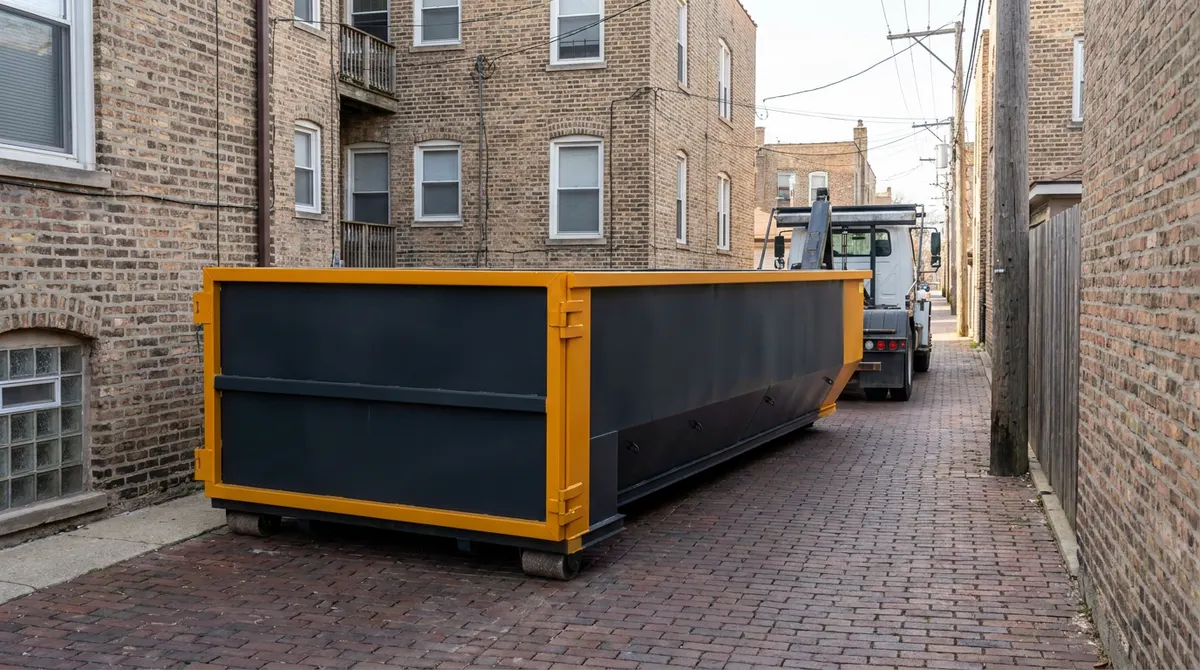
Dumpster delivery in Chicago's dense urban environment often involves navigating narrow alleys and tight gangways, particularly in neighborhoods like Pilsen, Logan Square, and Lakeview, where properties often have limited space for large roll-off containers, necessitating careful planning for truck access, clearance measurements, and appropriate dumpster sizing.
Delivering to Tight Chicago Alleys
<p>Delivering a dumpster to a narrow alley in Chicago requires specific logistical considerations due to the city's dense housing stock and property layouts. Many two-flat and three-flat homes, common in areas such as Avondale and Wicker Park, feature gangways or driveways that are less than 10 feet wide, which is narrower than the typical 12-foot width required for standard dumpster truck access. The challenge extends to overhead obstructions like tree branches, power lines, and even garage overhangs, which must be cleared to allow safe passage for the delivery vehicle and the dumpster itself. City of Chicago public way use permits are often necessary when a dumpster must be placed on a residential street rather than a private driveway, particularly in high-density areas like Lincoln Park or Hyde Park where private space is limited. The process involves coordinating with the hauler to confirm the alley's navigability and ensuring all local regulations are met before delivery.</p>
Measuring Your Gangway Clearance
<p>Accurate measurement of your property's gangway and alley access is crucial for a successful dumpster delivery in Chicago. These measurements determine the largest dumpster size that can be safely placed and picked up without damaging property or obstructing public access. The minimum width for a standard roll-off truck is approximately 10 feet, though some smaller trucks can manage 8 feet. The vertical clearance needed for a dumpster truck is typically 14 to 16 feet, accounting for the truck's height and the lift mechanism. This is especially important near older buildings in neighborhoods like Bridgeport, where power lines or mature trees might present obstacles. It is recommended to measure the entire path from the street to the desired placement spot, noting any turns or narrow points. For properties near The 606 Trail or Humboldt Park, where green spaces often border residential lots, tree canopy height must also be considered. Documenting these measurements with photos can assist the dumpster rental company in planning the delivery.</p><ol><li><strong>Measure Width:</strong> Use a tape measure to determine the narrowest point of your gangway or alley from fence to fence, or wall to wall.</li><li><strong>Check Overhead Clearance:</strong> Measure the height from the ground to the lowest overhead obstruction, such as wires, tree limbs, or eaves.</li><li><strong>Assess Turning Space:</strong> Observe the area where the truck will need to turn from the street into the alley or gangway, noting any fixed objects like lampposts or fire hydrants.</li><li><strong>Note Surface Conditions:</strong> Identify any uneven surfaces, soft ground, or steep inclines that might affect truck stability, especially during Chicago's freeze-thaw cycles.</li><li><strong>Confirm Permit Needs:</strong> Verify if a City of Chicago public way use permit is required for street placement by contacting the local Department of Streets and Sanitation or checking the City of Chicago website.</li></ol>
Truck Access and Turning Radius
<p>The dimensions of a dumpster delivery truck, including its turning radius, significantly impact its ability to access tight Chicago alleys and driveways. Standard roll-off trucks are substantial vehicles, typically ranging from 25 to 35 feet long and 8 to 9 feet wide, and require a considerable amount of clear space to maneuver. The turning radius for these trucks can be up to 50 feet, which means tight corners or short driveways, common in neighborhoods such as Rogers Park or Beverly, can pose significant challenges. When the truck lifts the dumpster, it also needs additional vertical clearance and horizontal space for the hydraulic arm to extend and safely place the container. In areas with high traffic or limited parking, like near Wrigley Field or Navy Pier, coordinating delivery times is essential to avoid peak congestion. Truck drivers must often contend with parked cars, utility poles, and narrow street widths, especially on residential side streets off major corridors like Western Avenue or Ashland Avenue. For detailed guidance, residents can refer to general guidelines on commercial vehicle access provided by local planning departments or resources like the <a href="https://www.illinois.gov/iema/Pages/default.aspx">Illinois Emergency Management Agency</a> for large vehicle safety.</p>
Choosing a Smaller Dumpster for Tight Spots
<p>For properties with restricted access in Chicago, selecting a smaller dumpster size is often the most practical solution. Dumpsters come in various capacities, measured in cubic yards, with 10-yard and 15-yard options being the most suitable for narrow alleys and limited driveways. These smaller units require less space for placement and are easier for trucks to maneuver into tight spots. A 10-yard dumpster, for instance, typically measures about 12 feet long by 8 feet wide by 3.5 feet high, fitting comfortably in many Chicago gangways. For comparison, a 30-yard dumpster can be over 22 feet long, making it impractical for most residential alley deliveries. While smaller dumpsters have lower weight limits, they are often sufficient for common projects like bathroom remodels, garage cleanouts, or light demolition of older homes in Pilsen or Bridgeport, which might contain heavy materials like plaster and brick. It is important to match the dumpster size to the project's waste volume and the property's physical constraints. The minimum charge for any dumpster rental is $595.</p><table><thead><tr><th>Dumpster Size</th><th>Approximate Dimensions (L x W x H)</th><th>Typical Use Case for Tight Spots</th></tr></thead><tbody><tr><td><strong>10-Yard Dumpster</strong></td><td>12 ft x 8 ft x 3.5 ft</td><td>Small bathroom remodel, garage cleanout, yard debris</td></tr><tr><td><strong>15-Yard Dumpster</strong></td><td>14 ft x 8 ft x 4.5 ft</td><td>Single-room renovation, roof tear-off (small), heavy debris from older homes</td></tr><tr><td><strong>20-Yard Dumpster</strong></td><td>22 ft x 8 ft x 3.5 ft</td><td>Larger cleanouts, multi-room projects (if access allows)</td></tr></tbody></table>
Preparing the Space Before Delivery
<p>Proper preparation of the delivery site is essential to ensure a smooth dumpster drop-off in Chicago's narrow urban spaces. This includes clearing any obstructions from the alley or gangway, such as parked vehicles, trash cans, or loose debris, before the scheduled delivery window. Homeowners in neighborhoods like Logan Square or Lakeview should trim overhanging tree branches to meet the required 14-16 feet of vertical clearance. If the dumpster is to be placed on a street, particularly in areas with strict parking regulations or heavy traffic like near Millennium Park, securing a City of Chicago public way use permit in advance is mandatory, and often requires several days for processing. It is also beneficial to lay down plywood or wooden planks in the designated drop-off area if the surface is soft or if there is concern about potential damage to concrete or asphalt, especially during winter months when ground conditions can be unpredictable due to freeze-thaw cycles. Clear communication with the dumpster rental company about any specific site challenges, including potential heavy demolition debris from older homes, helps prevent delays and ensures safe placement. For information on local waste disposal, consult resources like <a href="https://www.earth911.com/">Earth911</a>.</p><ol><li><strong>Clear the Path:</strong> Remove all vehicles, trash bins, and movable obstructions from the alley or gangway.</li><li><strong>Trim Vegetation:</strong> Ensure at least 16 feet of vertical clearance by trimming any overhanging tree branches or bushes.</li><li><strong>Secure Permits:</strong> Obtain a City of Chicago public way use permit if the dumpster will be placed on a public street.</li><li><strong>Protect Surfaces:</strong> Lay down plywood or wooden planks in the drop-off area to protect driveways or soft ground.</li><li><strong>Communicate Obstacles:</strong> Inform the rental company of any fixed obstacles, tight turns, or overhead wires that might affect delivery.</li></ol>
Quick questions
What is the minimum width required for a dumpster truck in Chicago alleys?
The minimum width required for a standard dumpster roll-off truck is typically 10 feet, though some specialized smaller trucks can navigate clearances down to 8 feet. It is crucial to measure the narrowest point of the alley or gangway.
Do I need a permit for a dumpster in a Chicago alley?
If the dumpster is placed entirely on private property, such as a private driveway or a private section of an alley, a City of Chicago public way use permit is generally not required. However, if any part of the dumpster extends onto a public street or public alley, a permit is typically necessary.
What dumpster sizes are best for narrow Chicago properties?
For properties with narrow alleys or limited space in Chicago, 10-yard and 15-yard dumpsters are usually the best choices. These sizes are compact enough for easier maneuvering and placement in tight gangways and smaller driveways.
What are common overhead obstructions in Chicago alleys?
Common overhead obstructions in Chicago alleys include low-hanging utility wires (e.g., telephone, cable), tree branches, and garage overhangs. A minimum vertical clearance of 14 to 16 feet is generally needed for safe dumpster delivery and pickup.
How does Chicago's weather affect dumpster delivery in alleys?
Chicago's weather, particularly winter freeze-thaw cycles and heavy snow, can affect ground conditions in alleys, making surfaces soft or uneven. Snow accumulation can also narrow access points, requiring pre-clearing of the delivery path for safe placement.
Need it handled now? See Dumpster Rental in Chicago.